
Advanced Decompilation for Visual Basic and .NET Code
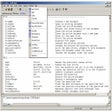
VB Decompiler, created by DotFix Software, is a specialized tool for reversing compiled applications built in Visual Basic 5.0 and 6.0. It supports both native code and P-Code and also works as a .NET decompiler for managed assemblies written in VB.NET, C#, and other compatible languages. The software is offered in multiple paid tiers, giving developers, analysts, and researchers access to reverse engineering features suited to legacy and modern applications.
This utility focuses on decompiling Visual Basic applications, handling P-Code with high accuracy and providing readable output for lost or damaged projects. It can also examine native-compiled binaries using its built-in emulator and tracing engine, which supports deeper inspection of machine-level instructions. Users analyzing .NET assemblies benefit from MSIL disassembly, letting them explore methods, forms, and events in a structured way. These capabilities give the tool strong value for code recovery and security analysis, although native VB output often requires manual cleanup.
Reliable Tools for VB and .NET Analysis
Broad Support with Practical Utilities
VB Decompiler runs on standard Windows systems and can operate on Linux environments through compatibility layers. It includes useful components such as a hex editor, form and module structure views, and awareness of common COM and OLE objects used in VB6 programs. The recent addition of an AI-powered helper improves the readability of decompiled code by reorganizing logic and renaming variables. This makes the tool more accessible for long-term maintenance work, even though complex GUIs and optimized binaries still pose challenges.
Technical Constraints and Reverse Engineering Factors
While the software handles P-Code with strong accuracy, limitations appear when working with native-compiled binaries, where only portions of code are recoverable and manual intervention becomes necessary. Decompiled output cannot restore original variable names or custom identifiers, which impacts readability. The tool also depends on how the original program was compiled; optimizations and protections can reduce clarity or introduce inaccuracies. These constraints reflect the general nature of reverse engineering rather than flaws unique to the program.
Focused Utility for Software Analysis
VB Decompiler offers a capable set of tools for working with legacy VB applications and .NET assemblies, making it useful for developers, researchers, and professionals responsible for code recovery or software auditing. Its blend of decompilation, emulation, and structural analysis gives it an edge in handling older projects, although the quality of recovered code depends heavily on the source binary. Users seeking deeper clarity or working with heavily optimized applications should explore the program’s trial options to evaluate how well it fits their workflow.
Pros
- Accurate P-Code decompilation
- strong tools for .NET and native VB analysis.
Cons
- Native binaries often require manual fixes
- Original variable names and some structures cannot be restored.