
PDF processing toolkit
PDFTK is a cross-platform office processing utility that runs on Windows, Linux, and macOS through native binaries or command-line builds. It includes a command-line engine and optional graphical interface editions that execute document assembly and page-level operations. The software reads and writes standard PDF structures and performs direct object-level manipulation without rendering content.
PDFTK’s core operations include page extraction, document merging, rotation, background overlays, and metadata updates. Execution occurs through parameter-driven commands or structured form fields inside the desktop interface. The toolkit treats PDFs as structured containers and processes files locally, without requiring external services or cloud components.
PDFTK also includes a merge and split module that processes multiple inputs using ordered handles and page expressions. Merges concatenate files in the order of arguments, while splitting generates outputs at fixed intervals or explicit ranges. The parser rebuilds page trees and cross-reference tables. Encrypted PDFs require passwords. Batch merges consume significant memory because single-stream processing lacks incremental staging for large sets.
Seamless merge and split
The toolkit contains page rotation and stamping tools that modify page dictionaries and overlay PDF layers. Rotation updates attributes rather than rasterizing content. Stamp and background operations insert pages as overlays or underlays. Selection syntax supports odd, even, reverse, and custom sequences. Layer insertion requires compatible dimensions. However, mismatched sizes produce clipped results because no automatic scaling occurs during composition.
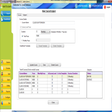
The program form processor reads and writes AcroForm fields using FDF/XFDF files. Values import via data maps and export to text datasets. The engine updates metadata through simple key-value assignments. Attachment handling embeds external files into PDF containers. The graphical edition exposes these controls through fixed dialogs, while the command-line version requires parameter flags. XFA-based dynamic forms are not fully interpreted.
Advanced command-line utility
PDFTK operates as a parameter-driven PDF manipulation engine with both command-line and desktop variants. It processes document structure elements, page trees, and form fields without rendering layers. Supported environments include major desktop operating systems with native or packaged builds. Notable constraints include limited support for XFA forms and the lack of automatic scaling during overlay operations. Processing is local and file-based, with no built-in incremental preview pipeline.
Pros
- Direct command-line execution
- Structured page range parser
- Form data import and export
- Overlay and background insertion
Cons
- No automatic overlay scaling