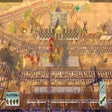

Remastered FPS framework
Halo 2: Anniversary is a modular shooter package in Halo: The Master Chief Collection on Steam. It features a mission-based campaign and discrete multiplayer modes, all managed through a unified launcher and profile framework. Core combat action mechanics are governed by a shield-and-health damage model, deterministic weapon behavior, and physics-based projectile interactions.
Halo 2: Anniversary supports real-time switching between original and remastered graphics, including cinematic pipelines. Progression and unlock tracking are handled at the collection level rather than at the individual title level. It integrates shared input, matchmaking, and data persistence systems inherited from the broader collection architecture.
Halo 2: Anniversary shooter package’s core loop cycles through combat, checkpoint-based state saving, and scripted transitions across linear missions. Enemy entities operate under predefined AI states controlling movement, targeting, and retreat behaviors. Weapon systems apply fixed damage, reload timers, and ammunition limits, while vehicles introduce alternate physics and collision handling. Mission progression advances through trigger volumes and objective flags, with limited systemic branching.
Core combat loops
Campaign completion updates a centralized progression structure shared across the Master Chief Collection, tracking mission status and difficulty flags without altering mechanical parameters. Multiplayer implements a ruleset-driven matchmaking system that assigns maps, modes, and teams based on server-side logic. Global Rank and unlock tracking function independently of in-match performance modifiers. However, the core combat loop remains insulated from progression, maintaining static parameters throughout.
The Anniversary build supports a real-time graphics toggle system that swaps asset sets, lighting models, and audio layers without reloading levels. AI routines and physics calculations remain unchanged between visual modes, ensuring consistent simulation output. Cutscene playback is handled through pre-rendered video streams in Anniversary mode, while gameplay sequences maintain engine-level rendering. This separation creates a fixed boundary between visual presentation and mechanical logic.
Rigid mission flow
Halo 2: Anniversary delivers a structured FPS framework built around linear mission execution, deterministic combat systems, and centralized progression management within the Master Chief Collection. Its most distinctive implementation is the live graphics switching system, which alters visual assets without modifying underlying mechanics. Observable limitations include rigid mission flow, minimal systemic variation across encounters, and progression systems that track completion rather than influencing gameplay behavior.
Pros
- Stable mission-based campaign architecture
- Real-time graphics mode switching without simulation changes
- Centralized progression tracking across modes
Cons
- Static combat parameters across progression states